Last Updated on 5 months ago by admin
Patient Positioning Wedge: The Essential B2B Solution for Safe and Effective Medical Positioning
In modern healthcare, precise patient positioning is critical for ensuring safety, comfort, and optimal clinical outcomes. Patient Positioning Wedges, also known as medical positioning triangles, are specialized devices designed to support and stabilize patients during medical procedures, recovery, or extended bedrest. These versatile tools are indispensable for hospitals, surgical centers, and long-term care facilities. This article explores the benefits, applications, and key considerations for sourcing Patient Positioning Wedges in the B2B medical equipment market, empowering procurement managers and distributors to make informed decisions.
Positioning Pillows and Cushions offer support and comfort while sitting, reclining, or lying down. Wedges, rolls, abductors and more suit all ages and sizes. When resting or recovering, positioning pillows and cushions place your body in the best form for healing and comfort.
What is a Patient Positioning Wedge?
A Patient Positioning Wedge is a foam or gel-based medical device shaped like a triangle or wedge, designed to position patients securely during medical interventions or recovery. Typically made from high-density, antimicrobial foam or durable gel, these wedges feature non-slip surfaces and are available in various angles (e.g., 15°, 30°, or 45°) to support different anatomical positions. Some models include washable or disposable covers for hygiene compliance.
Key specifications include:
- Sizes: Available in small, medium, and large to accommodate pediatric, adult, and bariatric patients.
- Weight Capacity: Supports up to 200-500 pounds, ensuring stability for diverse patient populations.
- Materials: Medical-grade foam or gel with antimicrobial properties, often paired with waterproof, reusable covers.
- Angle Options: Customizable incline angles for precise positioning needs.
Compliant with standards like ISO 13485 or FDA regulations, Patient Positioning Wedges are a critical component for B2B buyers seeking reliable, high-quality medical positioning solutions.
Turning and Positioning Bedridden Elderly: Caregiver Guide
Proper turning and positioning of bedridden elderly patients is a critical aspect of caregiving that directly impacts their health, comfort, and quality of life. When an elderly loved one is confined to bed due to illness, injury, or limited mobility, knowing the correct techniques for positioning bedridden elderly can make a significant difference in preventing complications and promoting healing.This guide offers practical advice for family caregivers on turning elderly patients in bed, using proper positioning aids, and implementing strategies for preventing pressure sores in elderly individuals who spend extended periods in bed.
Why Repositioning Matters
Regular repositioning of bedridden elderly individuals is not merely a comfort measure—it’s essential for their health and well-being. When elderly patients remain in one position for too long, they face several significant risks:
- Pressure Injuries (Bedsores): These painful wounds develop when constant pressure reduces blood flow to tissues. Preventing pressure sores in elderly patients requires consistent repositioning every 2-3 hours.
- Compromised Circulation: Immobility can lead to poor blood flow, increasing the risk of dangerous blood clots.
- Respiratory Complications: Fixed positioning can cause fluid buildup in the lungs, leading to pneumonia and other respiratory issues.
- Muscle Atrophy: Without movement, muscles weaken rapidly, making future mobility even more challenging.
- Joint Contractures: Joints can become stiff and eventually frozen in position without regular movement.
Studies show that implementing a regular schedule for turning elderly patients in bed can reduce the incidence of pressure injuries by up to 87%, highlighting the crucial importance of this care practice.
Basic Turn Technique
- Prepare the Environment: Raise the bed to a comfortable working height if possible, and ensure the wheels are locked.
- Communicate: Always explain what you’re about to do before touching the person.
- Position Yourself: Stand on the side of the bed toward which you’ll be turning the person, with your feet shoulder-width apart and knees slightly bent.
- Move the Person Toward You: Place one hand on the far shoulder and one on the far hip, and gently roll the person toward you.
- Use a Draw Sheet: For easier repositioning, consider using a draw sheet placed under the person from shoulders to thighs.
- Secure the Position: Once turned, use pillows to support the new position (details below).
For more detailed instructions on safe repositioning for caregivers, consider watching our caregiver training videos which demonstrate proper body mechanics.
The positioning wedge pillow is used for a huge range of applications at medical centers. The wedges for bed positioning are very commonly used for reducing the sacral pressure and preventing decubiti. The simple design of the wedges makes them a great product for preventing and managing existing sores. As compared to pillows and cushions, the wedges are more stable and offer better comfort to the patients.before read this article,you may check The Complete Guide for Patient Positioning.
Tools and Aids for Proper Positioning
The right proper positioning aids can make turning and positioning safer and more comfortable:
- Pillows: Regular pillows in various sizes are versatile positioning tools
- Wedge Cushions: Provide stable support for side-lying positions
- Roll Pillows: Help maintain proper alignment and prevent pressure in specific areas
- Draw Sheets: Facilitate easier turning without friction against the skin
- Turning Sheets: Specially designed to make repositioning easier
- Transfer Boards: Aid in moving patients safely from one surface to another
- Body Alignment Devices: Maintain proper positioning between turns
- Heel and Elbow Protectors: Offer additional protection for vulnerable pressure points
For guidance on selecting appropriate caregiving products and equipment, including proper positioning aids
Tips for Safe and Comfortable Repositioning
Implementing these caregiver safety techniques and comfort measures will benefit both you and your loved one:
For Caregiver Safety
- Use Proper Body Mechanics: Bend your knees, not your back, and keep the person close to your body when turning
- Seek Help When Needed: Don’t hesitate to ask for assistance with repositioning larger individuals
- Use Mechanical Aids: Consider patient lifts or other devices for transferring when appropriate
- Take Breaks: Recognize your limits and rest between physically demanding tasks
For Patient Comfort
- Monitor for Pain: Watch for verbal and non-verbal signs of discomfort during and after repositioning
- Check Alignment: Ensure joints are in natural positions, not twisted or strained
- Maintain Dignity: Keep the person covered appropriately during repositioning
- Create a Turning Schedule: Establish a regular routine, typically every 2 hours during the day and every 4 hours at night
- Document Positions: Keep track of positions and times to ensure comprehensive care
Remember that prevention is always easier than treatment. Regular repositioning combined with good skin care and nutrition forms the foundation of pressure injury prevention for bedridden elderly individuals.
Mastering the techniques for turning elderly patients in bed and implementing proper positioning bedridden elderly strategies are essential skills for any caregiver. While the process may seem challenging at first, with practice and the right tools, you can develop confidence in these important caregiving tasks.Remember that your efforts in preventing pressure sores in elderly loved ones through diligent repositioning significantly impact their health outcomes and quality of life.
How to Delicately Introduce New Positioning Solutions
One of the biggest challenges caregivers face isn’t finding the right positioning pillows—it’s convincing their loved one to try them. Elderly and disabled individuals often develop strong attachments to their current sleep setup, even when it’s clearly not serving them well.also Positioning equipment is used to support special needs children and adults in positions such as sitting, reclining, laying, crawling, or standing which they may not be able to do independently nor comfortably. Positioning aids can help the special needs user comfortably eat, interact, participate in therapy, play, sleep and more.
Understanding the Resistance
- Emotional attachment: That old pillow represents familiarity and independence. Suggesting changes can feel like criticism or acknowledgment of declining abilities.
- Fear of change: When physical capabilities are limited, any change feels risky. What if the new setup is worse?
- Loss of control: Being told how to sleep can feel infantilizing, especially when dealing with loss of independence in other areas.
The Gentle Introduction Strategy
- Start with observation: “I noticed you seemed uncomfortable last night. How did you sleep?” This opens dialogue without immediately proposing solutions.
- Focus on benefits they care about: Rather than “proper positioning,” emphasize better sleep, less morning stiffness, easier breathing, or reduced pain.
- Suggest a trial period: “What if we tried this for a week to see if it helps?” This feels less permanent and threatening.
- Use their doctor’s voice: “Dr. Johnson mentioned elevation might help with your breathing.” Medical authority often carries more weight than family suggestions.
Making the Transition Smooth
- Handle all logistics: Order, set up, and arrange everything so they don’t have to think about the details.
- Keep their old setup nearby: Don’t immediately remove familiar pillows. Having a backup reduces anxiety about the change.
- Be patient with the adjustment period: It may take several nights or even weeks for new positioning to feel natural.
Why Standard Pillows Are Not Helpful for Anyone Who Really Needs Support
Here’s what nobody tells you when you start caring for someone with mobility limitations: regular household pillows were designed for people who can unconsciously readjust their positioning throughout the night. They’re made for bodies that naturally maintain alignment and don’t require deliberate support for basic comfort.
Your elderly or disabled loved one operates under completely different rules. They might have limited mobility that prevents natural position changes, chronic pain that makes certain positions impossible, circulation issues that require specific elevation, or muscle weakness that can’t maintain proper alignment without external support.
Standard pillows fail because they:
- Compress under body weight, losing their supportive shape exactly when support is needed most
- Shift and migrate during sleep, leaving gaps where support should be
- Create pressure points rather than distributing weight evenly
- Don’t maintain therapeutic positioning angles throughout the night
- Force you to play nightly “pillow Jenga” instead of providing consistent support
This is why you can spend $200 on various pillows from different stores and still watch your loved one struggle to get comfortable. You’re not failing as a caregiver—you’re trying to solve an engineering problem with tools that weren’t designed for the job.
Why Use Positioning wedge?
Properly positioning a patient can be the difference between a comfortable care experience and pressure sore development, so it’s importance cannot be overstated. Our Positioning Cushions help improve patient’s comfort, posture and pressure relief, making mattresses, cushions and other equipment more effective
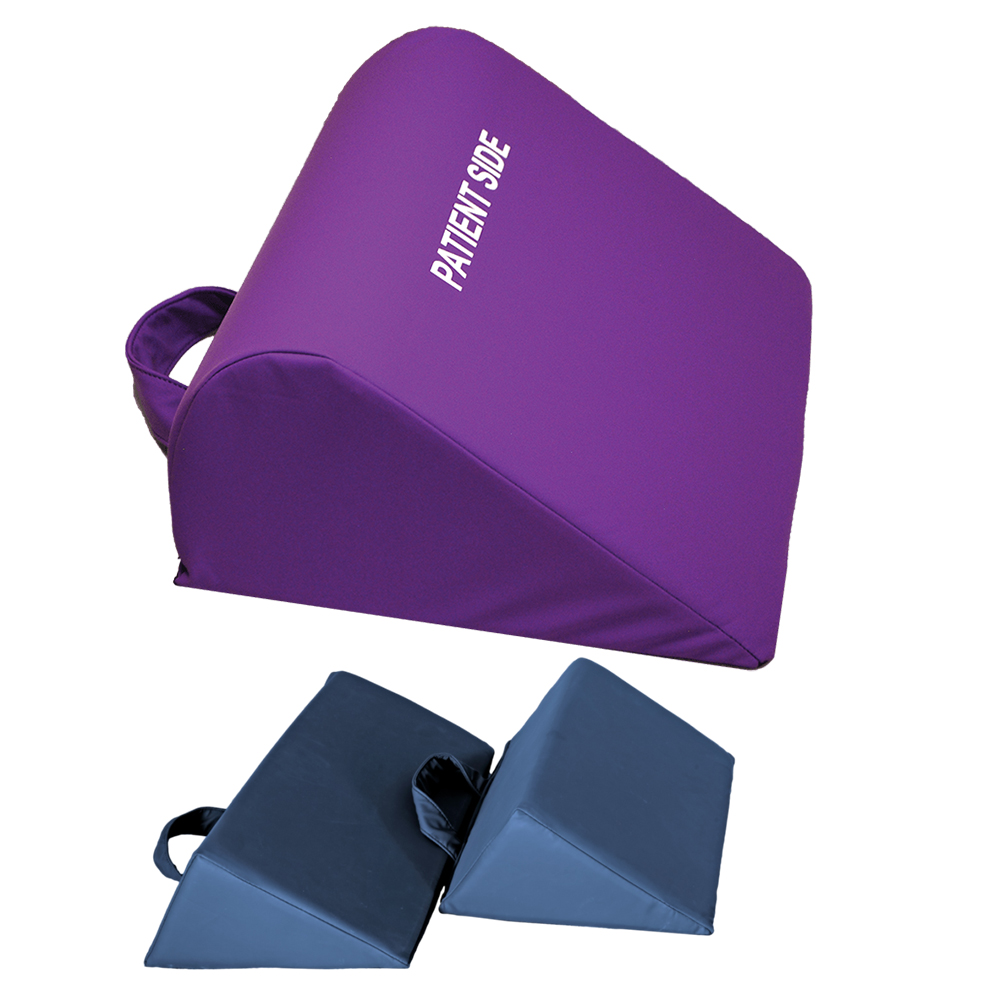
Wipe Down 30 Degree Positioning Wedge
Wholesale 30 degree positioning wedge for disable,Manufacturer & supplier from china, our company provide Bed Positioning Support Solutions and Customized service.The Wipe Down Positioning Wedge is great for use within bed management systems as it enables the user to be safely supported on their side without the need for a carer to be manually holding…
- The elderly, bedridden patients, handicap, lower limb fracture patients, due to surgery those who could not move but stay in bed for rest, pregnant women, use in seating for lumbar, back, legs, belly support.
- It can help patients turn over, change their posture, assist leg passive lifting, improve leg blood circulation
- At the same time is conducive to supporting pregnant women’s bellies to create a good environment for pregnant women to sleep
- The right angle helps relax your neck, being good for acid reflux, poor circulation, allergies, or any other condition in which breathing may be impaired in the supine position
What are the different types of patient positioning wedges?
patient positioning wedges difference type of wedges sort by functions
30-Degree Positioning Wedge
30-Degree Positioning Wedge is a A bed positioning wedge contoured to an optimum 30 degrees,designed for use wherever patients need firm support
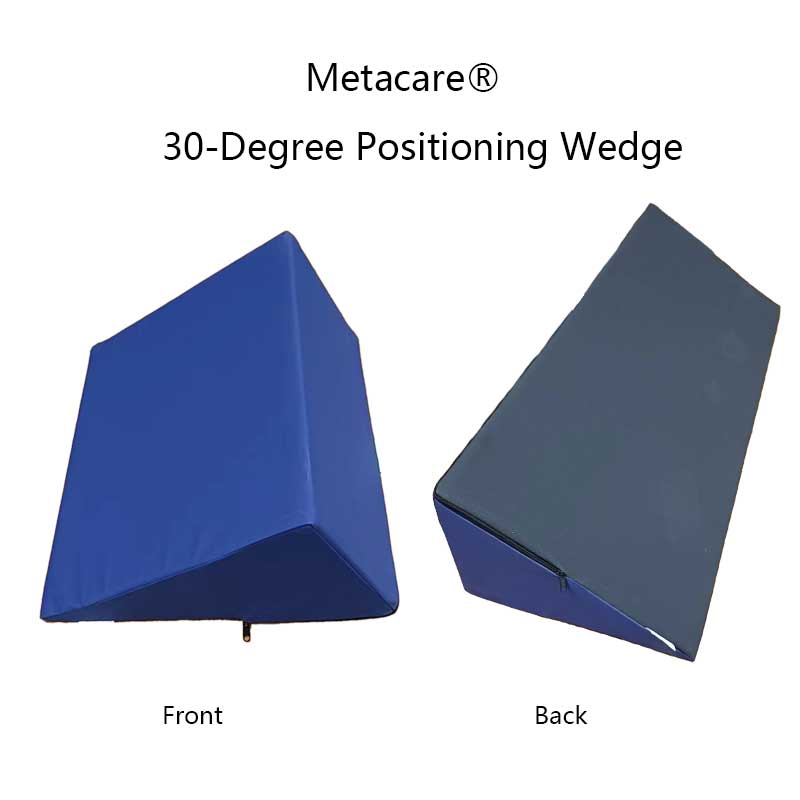
- High-density foam helps support the recommended 30° tilt position
- Flame-retardant, fluid-resistant,wipe-clean cover treated with antimicrobial properties
- Bottom sided nonskid material helps wedges stay in place where you need them most
- Wipe-clean outer cover reduces skin damaging friction And Can be disinfected for infection control
- Non-slip bottom keeps wedge securely in place
45-Degree Positioning Wedge
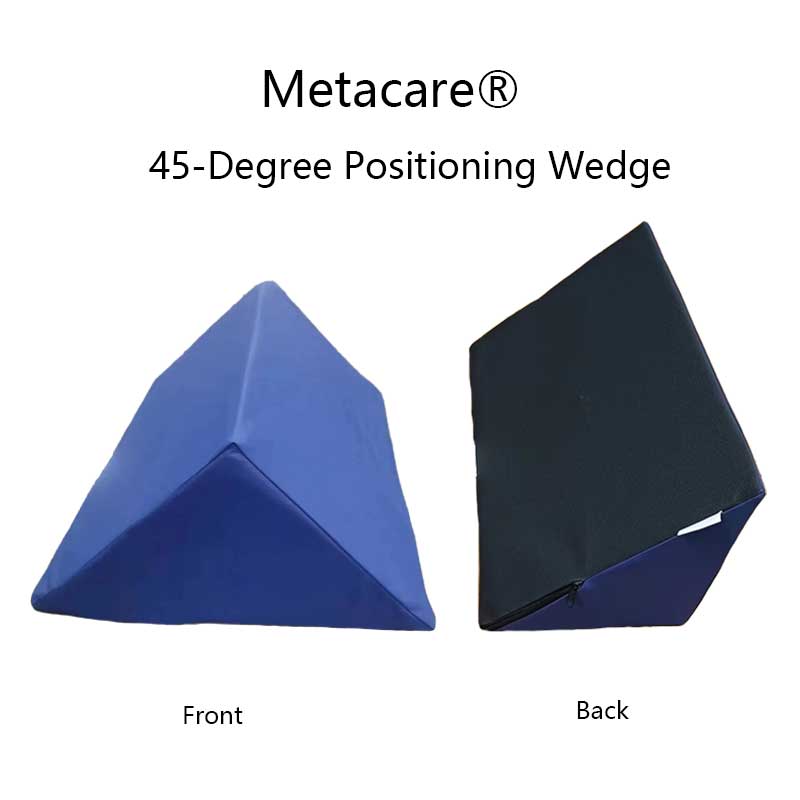
Specially designed 45 degree triangular foam wedge that helps maintain a perfect position which aids in the following:
- Helps reduce pressure in sensitive areas,such as sacral area to prevent decubitus ulcers,relieving pressure on hipbone and coccyx, Aids in the management of existing sores
- High-density foam helps provide stability and elevation during surgeries, imaging and rehab
Body Positioning Wedge
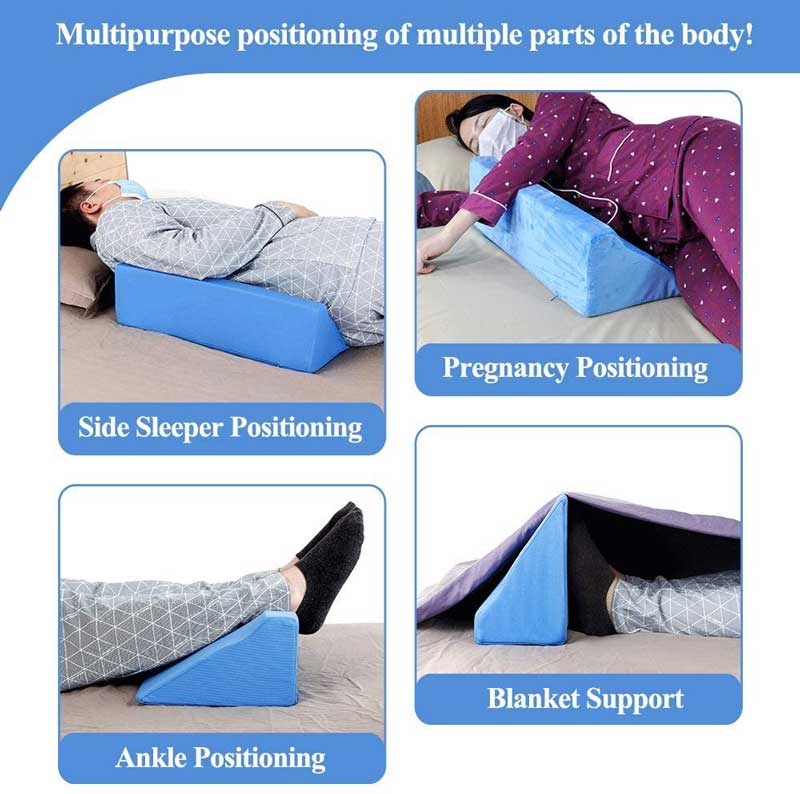
Body Positioning Wedges are used for side-lying support and trunk stabilization to maintain positioning schedules and help prevent pressure injuries. Positioning wedges can be used anywhere your patients need firm support. 45º wedge keeps shoulders and hips properly aligned for greater comfort.
R-shape Positioning Wedge
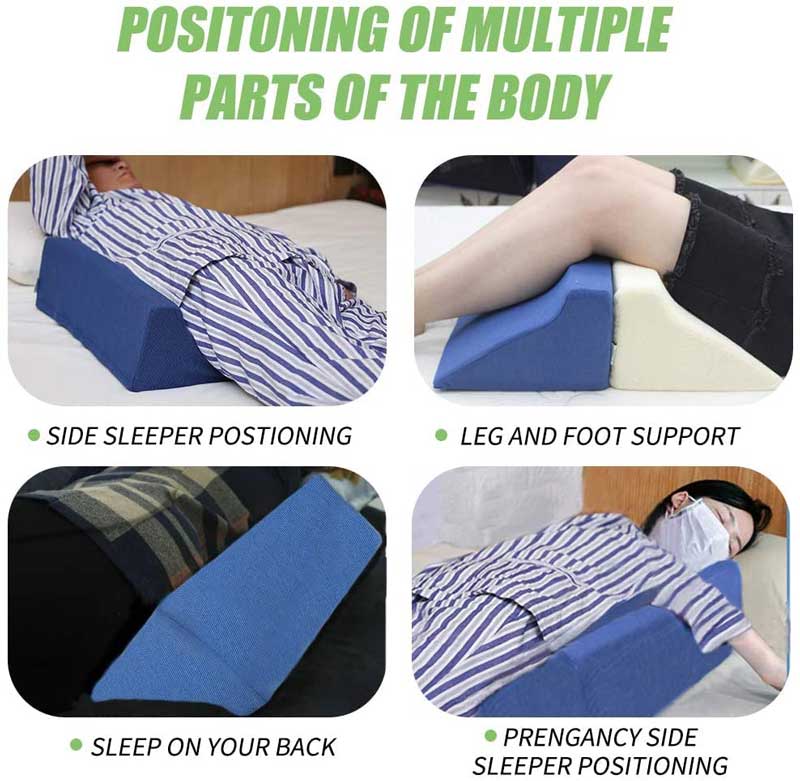
- This bed wedge pillow is designed with the R shape suitable for our human being’s somatotype theory.It can provide a golden slope for patients than a triangular pillow. Comfortable, gradual slope provides BACK and LEG support to help improve blood circulation to the heart, respiratory problems, reducing pressure on the spinal cord, and back pain
- It can help patients turn over, change their posture, assist leg passive lifting, improve leg blood circulation
A Gentle Slope For Back Sleeping
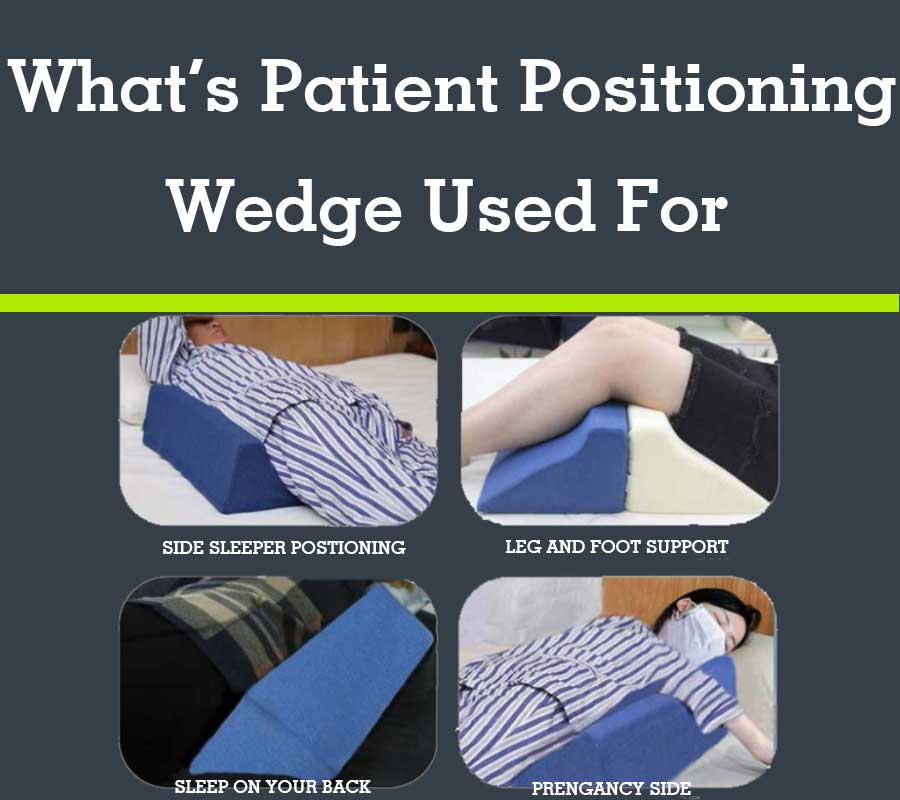
For back sleepers, you can use the wedge to create a slight incline for your back which, as we will discuss later in this article, could help several health-related issues. You’ll place the wide end up against your headboard or wall, while the flat side should lay level with the mattress so that the gentle slope is facing up.
A Gentle Slope For Side Sleeping
Like those who rest on their back, side sleepers should see health benefits from a bit of height as well. Further, the modest incline will allow your spine to rest in a more neutral position. You will place the wedge in the same position for back sleepers, and then you’ll be able to lay on your side comfortably.
Under the Knees
These cushions should also help minimize pressure on the lumbar – or lower back – region by placing the wedge underneath your knees with the wide edge facing you as your legs fall onto the slope. For those with sore muscles or swollen feet, elevating the legs improves circulation, which should alleviate these issues.
On the Lap
Who needs a desk when you have a wedge pillow? These cushions can be a convenient surface for your laptop while working in bed. Lay the flat edge of the pillow on your lap and place your computer on the slope side.
While some at-home workers put their computer directly on their lap, this could strain your shoulders and neck since you’re continually looking downward at your screen. The elevation from the pillow reduces this, thus improving the alignment of your neck and shoulders.
Under the Belly
For women who are pregnant and sleep on their side, placing the cushion under your belly could prove helpful since the product can counteract the uncomfortable effects of gravity pulling the weight of the belly down. To support your stomach, place the thinnest part of the pillow under your belly.
Positioning Wedge Benefits
- It can help patients turn over, change their posture, assist leg passive lifting, improve leg blood circulation.
- At the same time is conducive to supporting pregnant women’s belly to create a good environment for pregnant women to sleep.
- Right angle helps relax your neck, being good for poor circulation, allergies or any other condition which breathing may be impaired in supine position.
- Helps reduce pressure on your back for relief from back pain.
- Used with Blanket Lifts, Lifts your sheets to help discomfort associated with many injuries and post surgery recovery.
Pregnant Women Will Love It
Pregnancy may cause your legs and feet to swell from lower limb edema. This occurs when the uterus puts pressure on the pelvis, causing the blood to return more slowly from the legs and feet and eventually collecting into leg tissues.
To reduce your risk, use the pillow to elevate your legs and improve circulation, and for those women who experience lower back pain, this position should also help minimize that.
Alleviates the Symptoms of Acid Reflux and GERD
Gastroesophageal Reflux Disease – or GERD – is a health condition in which acid reflux from your stomach moves upward into the esophagus, which can be painful and irritating. Sleeping with your upper body in an elevated position could help prevent that acid from making its way up.
Relieves Pressure on Your Back, Shoulder, and Neck
For those seeking to minimize pressure in their back, shoulders, and neck, this product’s versatility to treat all these areas is worth consideration.
As we covered, placing the cushion underneath your knees should alleviate lower back pressure, while sleeping on the moderate incline places your spine in a neutral position to reduce pressure in the upper back, shoulders, and neck.
Decreases Sleep Apnea and Snoring Problems
Sleep Apnea is a disorder in which your breathing repeatedly starts and stops while you’re asleep. By resting on the incline of the pillow, you’re allowing your airways to open up more efficiently, which should improve your breathing. These open airways should also help minimize those pesky snoring habits as well.
Lowers the Risk of Glaucoma
According to the CDC, 3 million Americans have glaucoma, the second-leading cause of blindness. The most common glaucoma results from eye pressure, and lying flat on a bed can put added strain on the eyes. Utilizing the incline of the wedge cushion could help reduce pressure and slow down the progression of glaucoma.
Helps with Sinus Drainage
This product could also prove useful when you’re dealing with a sinus infection, which occurs when the mucus in our sinuses cannot properly drain. Along with other remedies that include drinking water and inhaling steam, experts recommend sleeping on an incline to prevent mucus from building up while also promoting sinus drainage.
Reduces Asthma Triggers
Asthma is a condition in which your airways narrow, which can lead to difficulty breathing and mucus build-up. For those who experience asthma symptoms during the night, sleeping on an incline could help stave off asthma triggers by keeping your airways more open and less susceptible to mucus build-up.
Improves Your Posture
If we’re not careful, our poor posture habits can exacerbate over time. Whether you’re working from home or in an office, you may start to find yourself hunching over on a regular basis. This pillow can help improve your posture by providing solid support for your entire back to keep you upright.
Good for Post-Operative Care
For those who have recently had surgery, this product could help make the transition from the adjustable hospital bed easier since you can use it to modify yourself to similar positions. However, it is best to check with your doctor before using one.
How to use the patient body positioning wedge?
Optimize Patient Care with Patient Positioning Wedges
Patient Positioning Wedges are more than just medical tools—they are essential for enhancing patient safety, improving clinical outcomes, and streamlining healthcare operations. As pressure ulcer prevention and patient comfort remain top priorities, these devices are a critical investment for hospitals, clinics, and distributors. With the global aging population driving demand for advanced positioning solutions, now is the time to act.
For healthcare procurement managers and medical equipment distributors, partnering with a trusted Patient Positioning Wedge supplier is a strategic step. Request a product catalog or demo to discover how these solutions can elevate your facility’s care standards. Keywords: Patient Positioning Wedge, medical positioning triangle, pressure ulcer prevention, B2B healthcare equipment.
Positioning Wedges Manufacturers China
Positioning Wedges OEM/ODM,Metacare offer the Positioning Wedges Customized service,Enquire now